A continuous puree trial is often described by its headline rate: so many kilograms in, so many kilograms out. That summary hides the part that decides whether the result can be repeated. Product may wait in a buffer, recirculate through a pump, bypass a treatment section or continue through a filler while another stream is stopped. The holding and transfer history is the link between the sample on the bench and the process that made it. Without that history, a successful trial is difficult to reproduce and a disappointing one is difficult to diagnose.
Draw the product path, not the equipment list
Start with a simple line drawing that follows the product from acceptance to the final container. Mark every tank, pump, pipe, valve, treatment section and filling point that the product can touch. Then mark the paths that are possible but not used in the trial. A buffer that is installed but bypassed is not part of the history. A recirculation loop that operates only during start-up is part of the history if product passes through it. The drawing should also show where cleaning solutions and reject streams leave the product path. This is the same discipline FAO applies when it describes unit operations as a sequence rather than a collection of machines.
- Use one drawing for the trial and mark the valves or routes actually used.
- Identify every point where product can wait, recirculate or leave the intended path.
- Keep utility and cleaning connections separate from the product route.
Give every buffer an identity
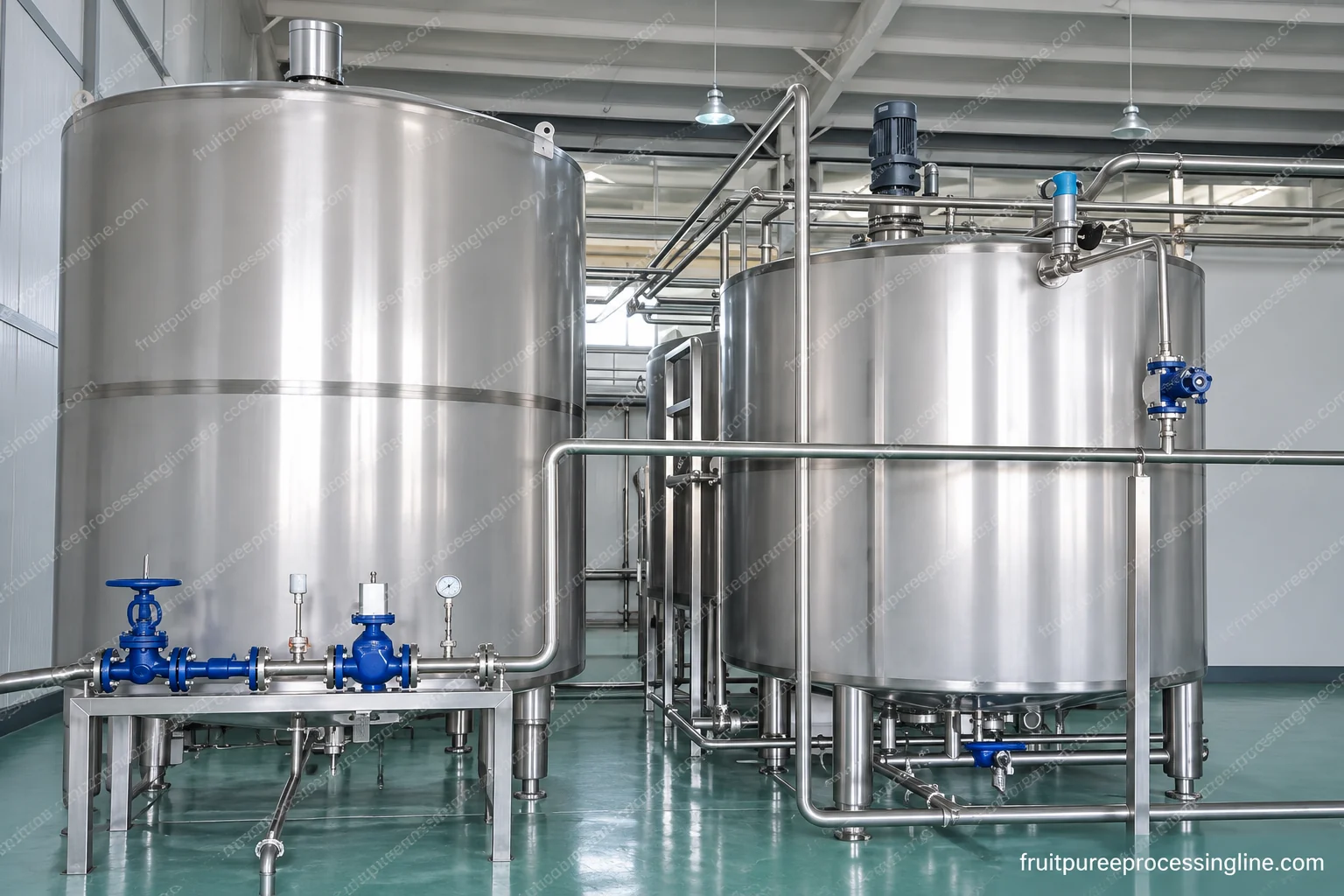
“The buffer tank” is not a sufficient record when a line has more than one vessel or when a vessel can receive product from different upstream duties. Give each vessel a unique identifier and record its function in the trial: feed buffer, transfer vessel, balance tank, day tank or receiving tank. Record the useful working volume rather than only the shell volume, and note the level at the start and end of each run. If the vessel is agitated or temperature-controlled, record the setting and whether it was operating. A buffer’s job is to absorb a difference between supply and demand; the record should show what difference it actually absorbed.
- Use the vessel tag and its role, not a generic equipment name.
- Record start and end levels, agitation and temperature control.
- Note any product that remains in the vessel at the end of the run.
Record interruptions as process data
Stops are not administrative events outside the process. A pump stop, a low-level alarm, a filler pause or a product change can change the time a portion of product spends in a tank or pipe. Record the time, duration, affected route and what happened to the product during the interruption. Was it recirculated, held at temperature, cooled, drained or diverted? Was the next container filled from the same buffer? The answer belongs in the trial record. FDA’s juice HACCP guidance treats monitoring, corrective actions and verification as linked records; the same logic applies to a trial even when the trial is not a regulatory HACCP plan. The point is to know which product was affected and what was done about it.
- Log planned and unplanned stops with start and end times.
- Identify the product location and condition during each stop.
- Record the disposition of product that was diverted or held.
Sample the product that actually moves
A sample taken from a tank after settling may not represent the product that leaves the tank. Take samples at defined points and times: feed to the treatment section, outlet from the treatment section, filler inlet and finished container where the trial design allows. Record the sample point, the time, the product temperature and the upstream route. If the line is running different fruit or different preparation, do not mix samples from different routes. Keep the sample identifier linked to the buffer and pump record. This is more useful than a large number of unlabelled containers, and it lets a later reviewer compare like with like.
- Sample at the points that correspond to the process question.
- Record the time and route for every sample, not only the date.
- Keep samples from different fruit, lots or preparation routes separate.
Retain treatment and packing timestamps
The treatment and packing record should connect to the same product history. Record when the product entered the treatment section, when it left, the route used and the time it reached the filler. If product was held between treatment and filling, record that interval and the holding condition. If the filler stopped, record what happened to treated product upstream. These timestamps do not by themselves prove a validated process, but they make the trial auditable. They also expose a common design problem: a treatment section may be stable while the transfer between treatment and filling creates a second, undocumented holding step.
- Link treatment records to the buffer and sample identifiers.
- Record the interval and condition between treatment and filling.
- State which records are trial data and which belong to routine production.
Use the history to challenge the line design
A trial history is most valuable when it changes a design decision. If product repeatedly waits in one buffer, the useful volume or the control logic may be wrong. If a pump changes the product appearance, the transfer duty may need review. If a filler pause forces product to recirculate through a treatment section, the stop/restart sequence needs a defined response. FAO’s general chapter warns that unit operations must match the process flow; a collection of capable machines can still make an unstable line. Use the completed record to ask which buffer, pump, valve or holding step created the most variability, then carry that question into the equipment review.
- Compare the planned route with the route actually used.
- Identify the holding or transfer step that created the largest product change.
- Carry the finding into the buffer, pump and treatment selection, not only the trial report.
Sources and scope
- FAO — Principles and practices of small- and medium-scale fruit juice processing, Chapter 6
General unit operations, fruit preparation, extraction, deaeration and transfer. Historical principles, not a validation record for a new line.
- US FDA — Guidance for Industry: Juice HACCP Hazards and Controls, First Edition
Hazard analysis, control measures, validation, verification and records for juice operations. It does not certify a machine or supply a universal process.
Source links identify the general material used for this analysis. They do not certify this site, a machine or a project process. Exact product parameters, regulatory classification and acceptance criteria require the applicable standard, a representative trial and competent review.