Input and product balance
Measure the fruit, useful puree and removed fractions over one defined run; state any additions and the sampling basis.
A mango-based production route combining real fruit preparation, flesh recovery, two-stage pulping and the selected bulk treatment and packing equipment.
Use a brushing arrangement suited to the fruit, then inspect and manually prepare it as required. Add the inclined conveyor where the receiving levels require a lift.
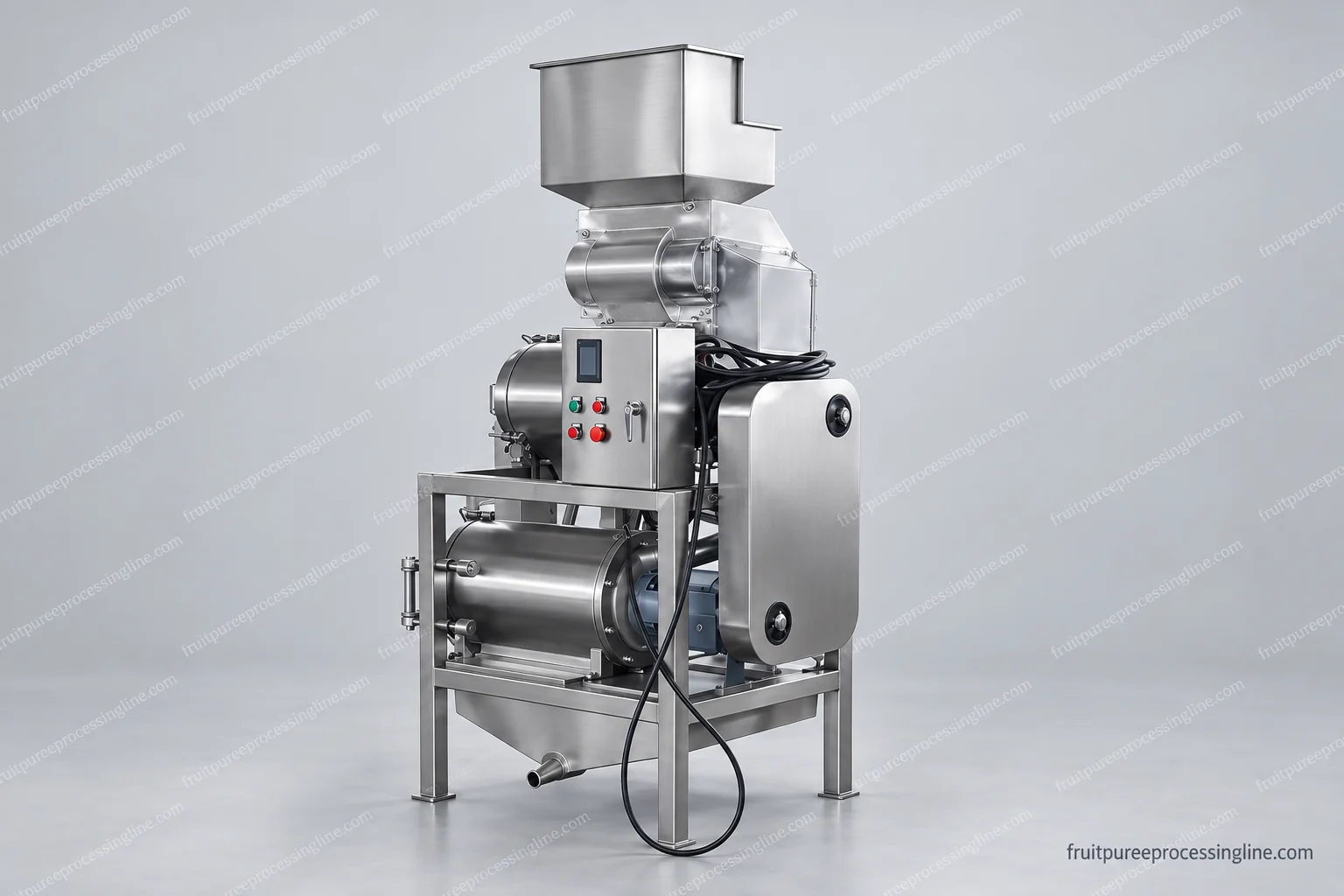
The mango preparation unit directs useful flesh toward screening and separates the unwanted fractions. Keep reject collection and tooling access clear.
Set the two screening duties around the accepted puree sample. Fibre and coarse-fraction requirements guide screen selection; catalogue input references do not set the finished-product output.
Use the holding and transfer arrangement needed between recovery and treatment. Include vacuum deaeration where the air and product requirements justify it.
A treated aseptic-bag endpoint includes compatible processing and filling duties. A buyer collecting puree for another process has a different final supply boundary.
CIP supports the compatible closed downstream circuits. Washer surfaces, preparation positions and removable screening parts still need separate cleaning and inspection access.
Explore the three-tank cleaning systemMeasure the fruit, useful puree and removed fractions over one defined run; state any additions and the sampling basis.
Agree the fibre/particle observation and the sample used for acceptance. Dv percentiles and screen apertures describe different things.
Coordinate the required thermal process, product passages, filling fitment and package handling for the chosen endpoint.
The offered schedule identifies machines, joining pumps/pipes, service connections and work retained by the customer. Whole-fruit preparation is fruit-specific; this mango route does not establish a supplied banana, guava or pear preparation line.
Equipment integration and acceptance Request a line quotation